The Story Inside the Painting “Mercy”
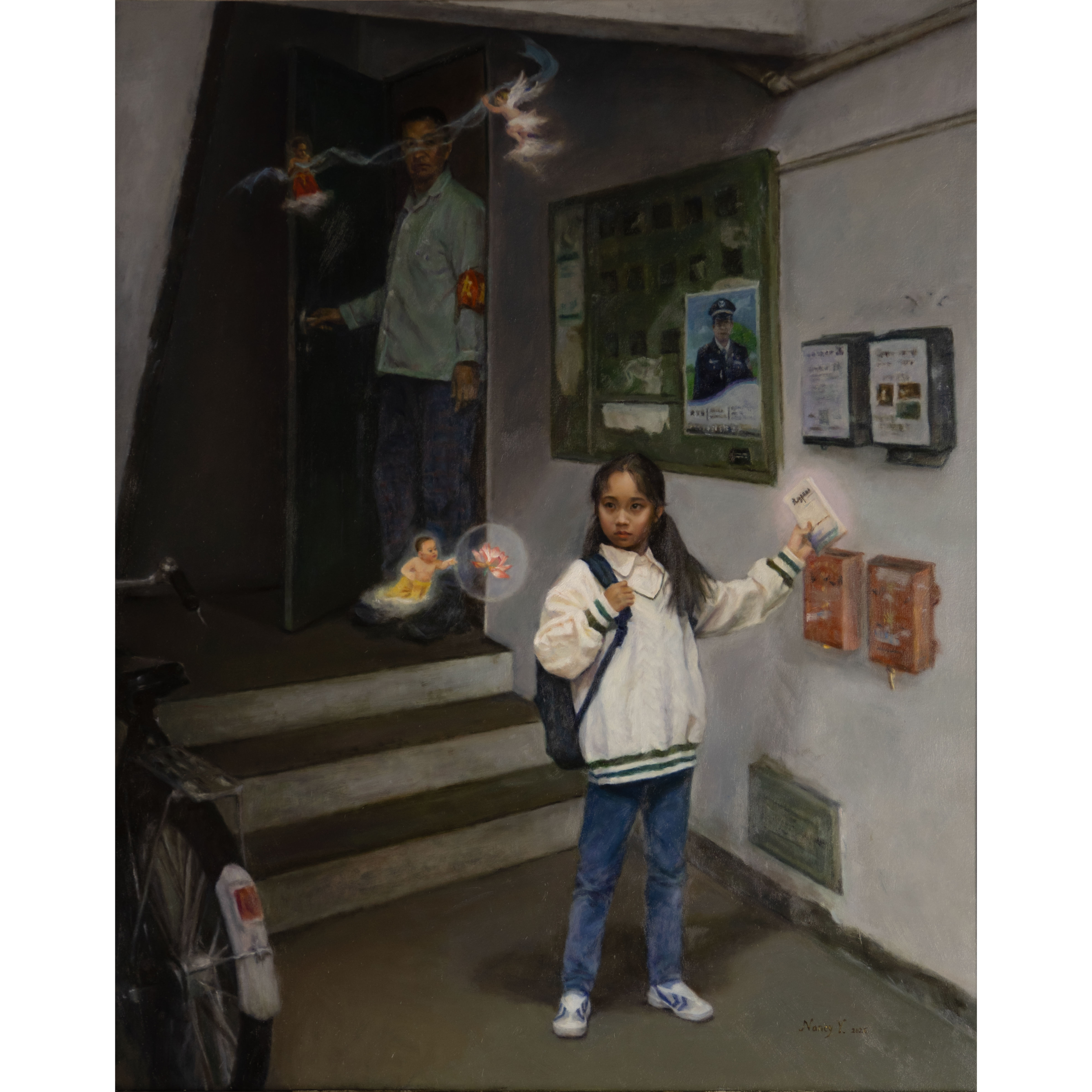
Mercy, oil on canvas, 32" x 40", 2026
In Mercy, a young girl secretly passes along a banned book — Nine Commentaries on the Communist Party — joining as a single drop in the tide of a peaceful movement of 460 million people who renounce the Party and its affiliated organizations, and seek lives rooted in truth, courage, and freedom
Though the act is perilous, it is guided by compassion. Three divine beings appear in the scene, each acting out of mercy. Two of them use silk to gently cover the enforcer's eyes — not as punishment, but as protection and grace. In doing so, they shield the little girl from danger, prevent the man from carrying out the CCP's orders, and quietly offer him something far greater: the chance to encounter truth for himself, and to choose whether to awaken from decades of indoctrination. The front divine blesses the girl directly, offering her a luminous lotus — a sign of heaven's protection over her quiet, courageous act. The diverse skin tones of the divine beings are intentional: kindness, courage, and the longing for freedom are not cultural — they are universal.
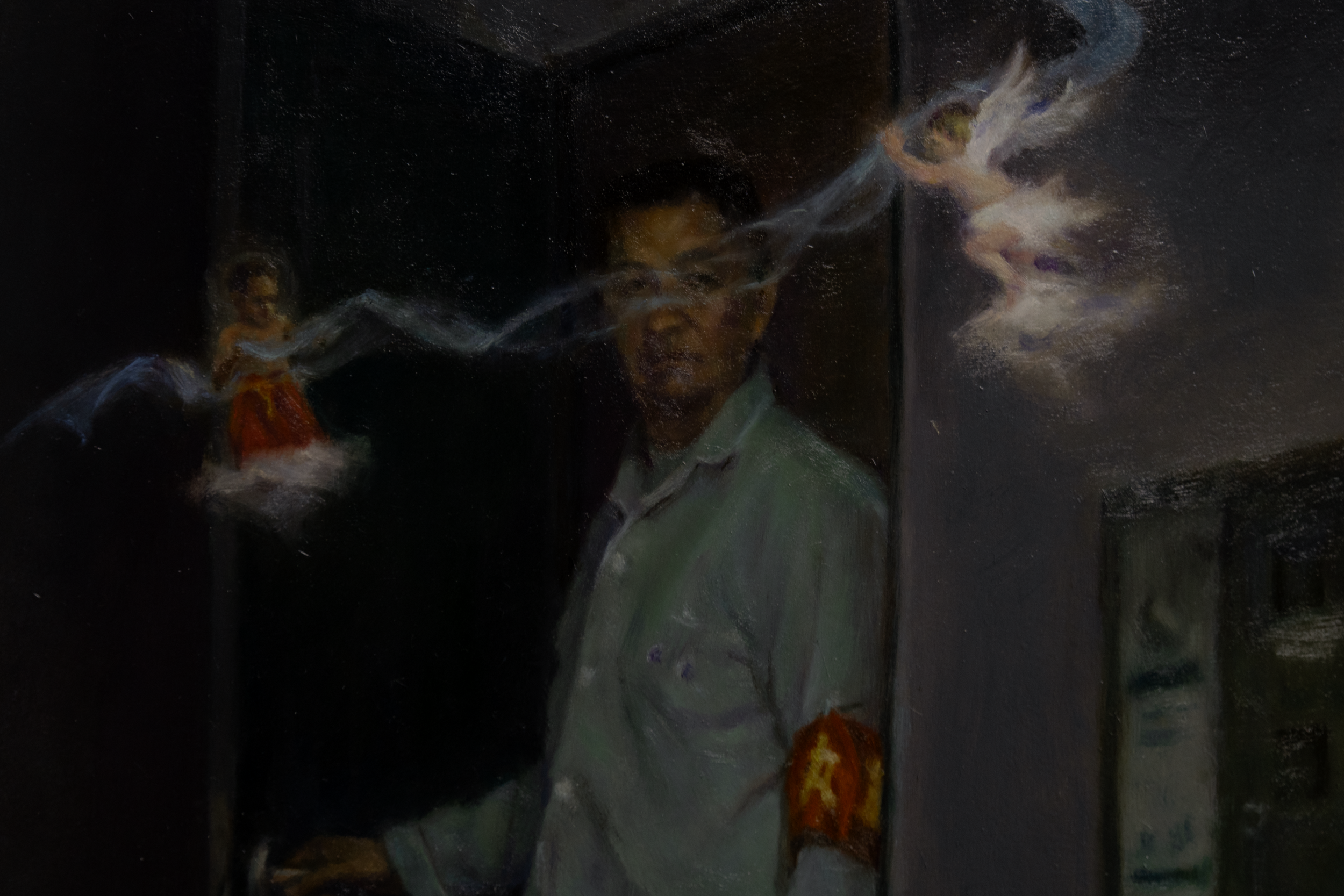
The red armband the enforcer wears carries deep historical weight. During the Cultural Revolution, Red Army members wearing these bands played a brutal role in persecuting those who held to traditional ways. That legacy continues today, as the CCP compensates loyal members who serve as grassroots enforcers and surveillance networks within their own communities.
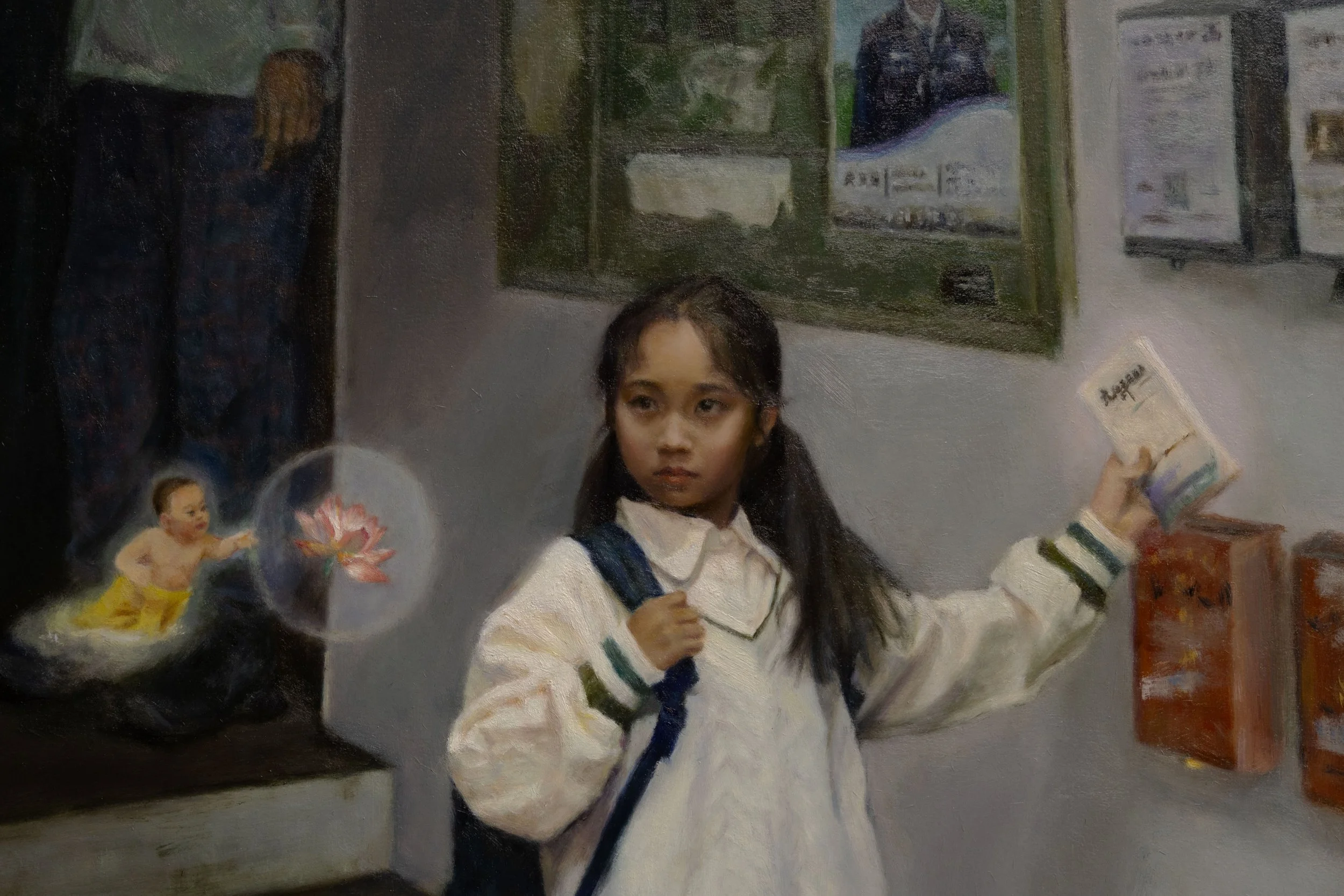
The little book the girl carries — Nine Commentaries on the Communist Party — documents nearly a century of CCP propaganda, persecution, engineered famine, massacre, tyranny, and censorship. It has the power to awaken those shaped by decades of state indoctrination. Countless people have risked their lives to share it. And quietly, it has become the seed of a peaceful transformation still unfolding across China.
The little girl glances somewhere else, checking that no one is watching — because in China, passing this book is an act that could cost everything. Since 1999, countless Falun Dafa practitioners who live by the principles of Truthfulness, Compassion, and Tolerance have faced brutal persecution. Families have been torn apart: parents sent to labor camps, relatives tortured or persecuted to death. Many children have been left homeless or orphaned, and some have themselves been tortured and persecuted to death. She is a symbol of all of them. Yet even in such a fearful environment, these children do not give up. Sustained by their faith, moved by the hope of sparing others from the same tragedy, and longing simply for a peaceful life, they find the courage — young as they are — to pass books like this one, or to step forward and speak the truth.
The lotus holds its own meaning in this story. Across Asian traditions, the lotus is more than a Buddhist symbol of paradise — it represents purity emerging from darkness. It grows rooted in mud, yet rises to produce blossoms of extraordinary beauty. That is exactly what this movement represents: something transcendent born from the most difficult of circumstances.
This painting draws from both my own experience as a teenager and from documented accounts on the Minghui website. Having witnessed this movement firsthand, I felt a responsibility to record this history — and to offer, through this work, a reminder that even in the deepest darkness, there is warmth, courage, and light worth reaching for.
PS: The link to Nine Commentaries and the record of “Quite the CCP” movement: https://global.tuidang.org/