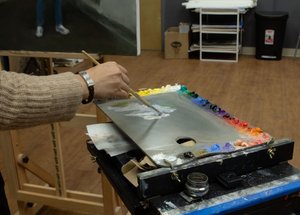
Behind the Scenes: How “Mercy” Came to Life
In my previous blog post, I introduced the thematic content of my painting, Mercy.
In this entry, I want to take you behind the scenes and share the creative process behind this artwork. This journey has given me a profound, practical understanding of a fundamental truth: the vital importance of perfecting your design as much as possible before the brush ever touches the canvas.
The Roots of Inspiration
My artistic practice is guided by a deep desire to share love and hope. I believe that artists should employ intuitive, accessible forms to convey the universal values of beauty—above all, love. In doing so, we can inspire humanity toward a higher purpose and draw the public closer to its divine origins, a mission that must always be supported by rigorous technical skill.
My influences are rooted in both Western and Eastern traditions:
In the West, Michelangelo stands as my guiding light. After a lifetime dedicated to art, he ultimately approached his work as a servant of God, humbly using his immense gifts to reflect higher truths rather than personal ambition. Similarly, the philosopher Plotinus wrote that “the soul’s becoming something good and beautiful is becoming like God, because the beautiful comes from God.” Together, these perspectives have shaped my conviction that an artist’s purpose extends beyond creating visually compelling work; we must actively cultivate inner goodness, moral integrity, and spiritual alignment. Technique only truly becomes meaningful when guided by these principles.
In the East, I am deeply influenced by the Han dynasty historian Sima Qian. His stated purpose in writing the Shiji (Records of the Grand Historian)—to explore the relationship between Heaven and Humanity, to comprehend the flow of time, and to establish a distinct moral and philosophical perspective—resonates profoundly with my own sense of artistic responsibility. His legacy encourages me to approach my studio practice with discipline, conscientiousness, and a spirit of service. Having directly witnessed the historical movement depicted in this painting, I felt a solemn moral obligation to record that history faithfully.
The initial concept for the piece emerged in 2023, originally drawing from the personal life experiences of my friends and me. Over time, however, the main characters evolved into symbolic figures representing the lives of many young adult survivors. Their stories are mirrored in real-world accounts, such as these:
Young Children Victimized in the Persecution of Falun Gong
Young Practitioner: The Truth is the Truth
Technical Process
Mercy began as a simple digital illustration in 2023. After passing through three rigorous rounds of selection, it was ultimately chosen for Respond/ Resist/ Rethink 2023: An Exhibition of Student Art for Change at the Stamps Gallery in Ann Arbor, MI, where it was featured in the final exhibition reception. As the concept deepened, I chose to develop it into a mid-scale, realistic oil painting. I hold that realism is the most honest, direct way to reflect the sublime and build a genuine connection with the viewer. For me, realism is not merely a technical preference; it is a moral and spiritual stance.
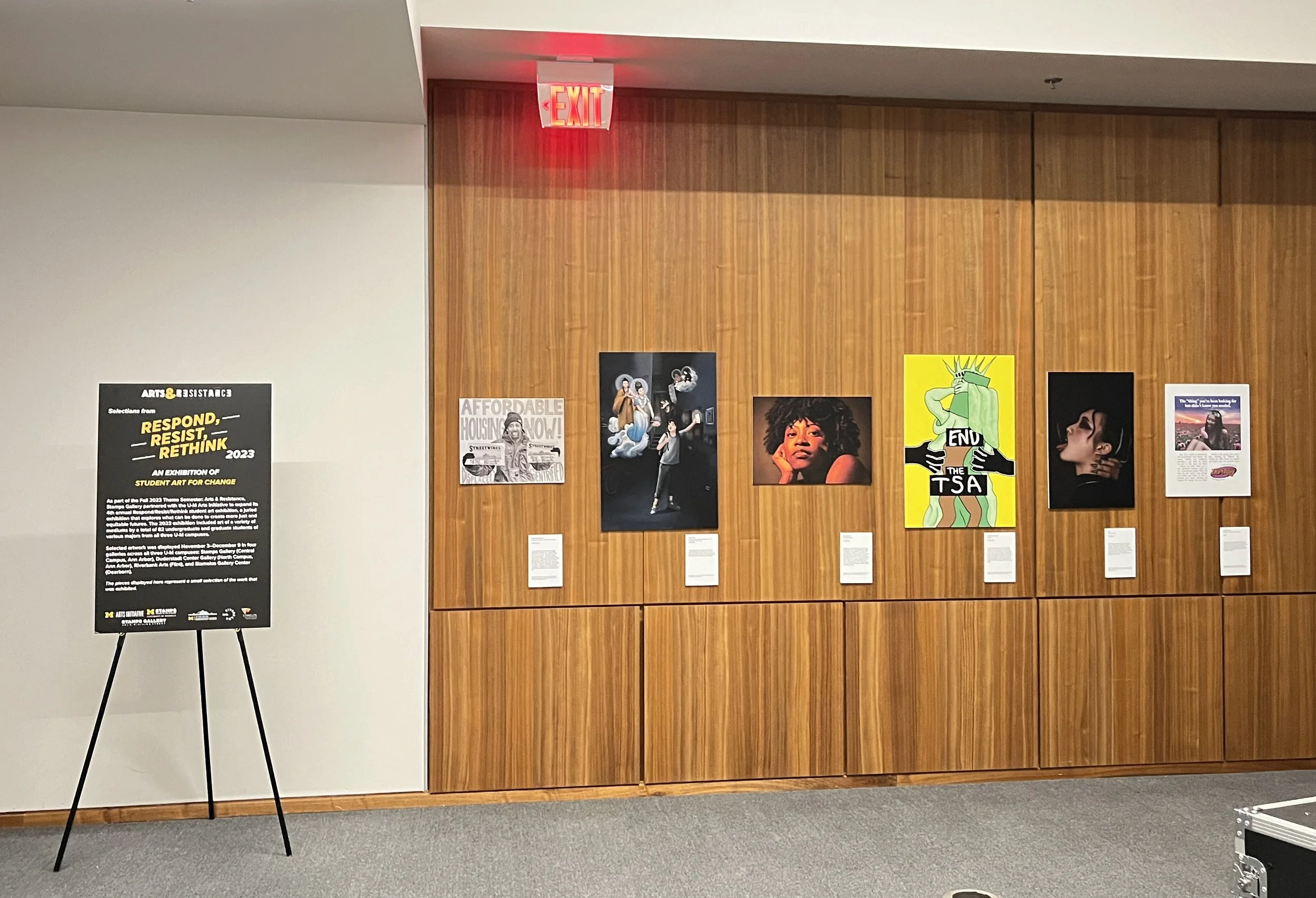
Respond/ Resist/ Rethink 2023
I found constant guidance in Michelangelo’s reflection that even genius cannot substitute for sustained effort: “After many years of searching and effort, is the artist able to embody his thought in hard stone” To translate an abstract intellectual vision into a physical reality, an artist must train the mind to understand that vision, the eyes to sharpen their judgment, and the hands to obey the eyes precisely.
To construct the composition with historical and physical accuracy, I relied heavily on multi-layered visual references:
Composition & Thumbnails
I began by mapping out the concept through numerous quick thumbnail sketches. I experimented extensively with alternative angles and viewpoints to test how the story could be told visually. Ultimately, I found myself returning to the original vision, which carried the strongest emotional resonance. From there, I refined the layout—adjusting the framing to fit the exact proportions and aspect ratio of my canvas, and shifting the focal point slightly to emphasize the relationship between the main characters.
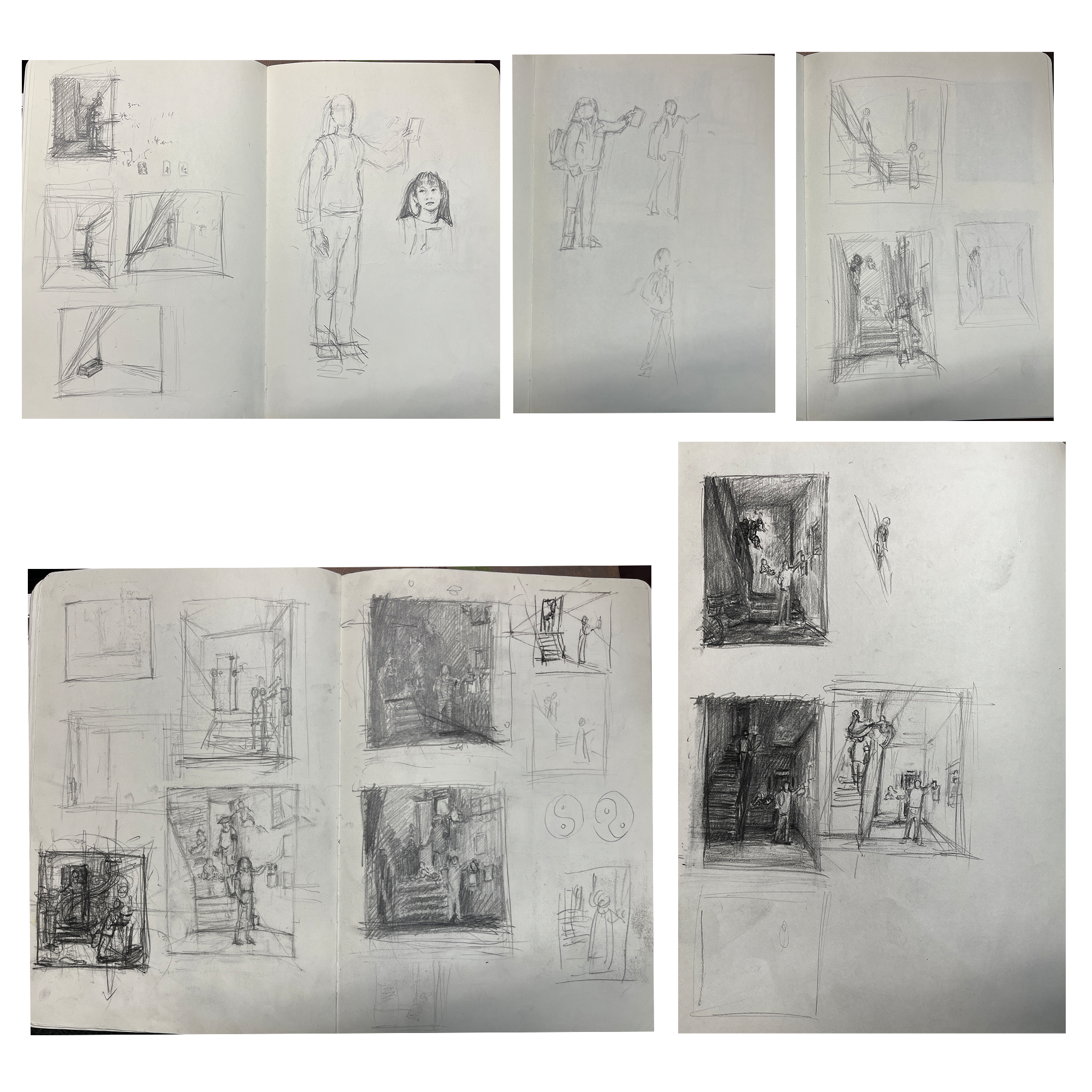
Original Thumbnails from Nancy Y.
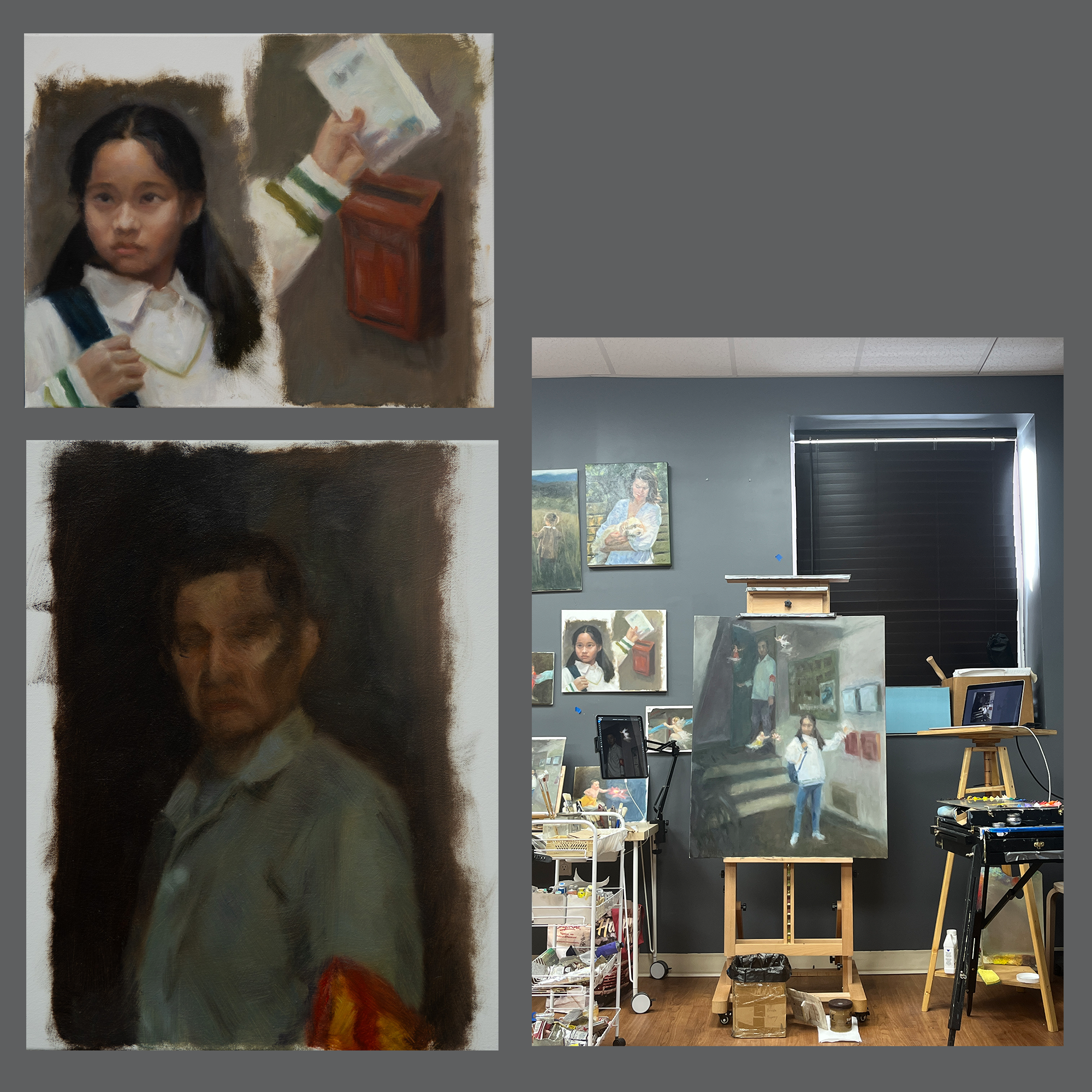
Color Study and Detail Study
Parallel to the compositional drafts, I executed small-scale color studies to establish the emotional temperature of the piece. These studies allowed me to block out the distribution of light and shadow, test the harmony of the palette, and ensure the atmosphere felt spiritually aligned with the theme before committing to the final canvas.
I prepared authentic costumes and photographed live models. I am exceptionally grateful to the young girl who modeled for the piece; despite her youth, she captured the exact emotional expressions I required with remarkable sensitivity.
The cherubs presented the greatest artistic challenge. While I initially used AI-generated images to brainstorm potential poses, the technology completely failed to capture natural skin tones or the subtle, radiant warmth of human emotion. Consequently, I reinterpreted all of my references through careful firsthand observation, painterly intuition, and traditional oil techniques—using Photoshop only as a tool to adjust color, perspective, and light to match the emotional and compositional demands of the scene.
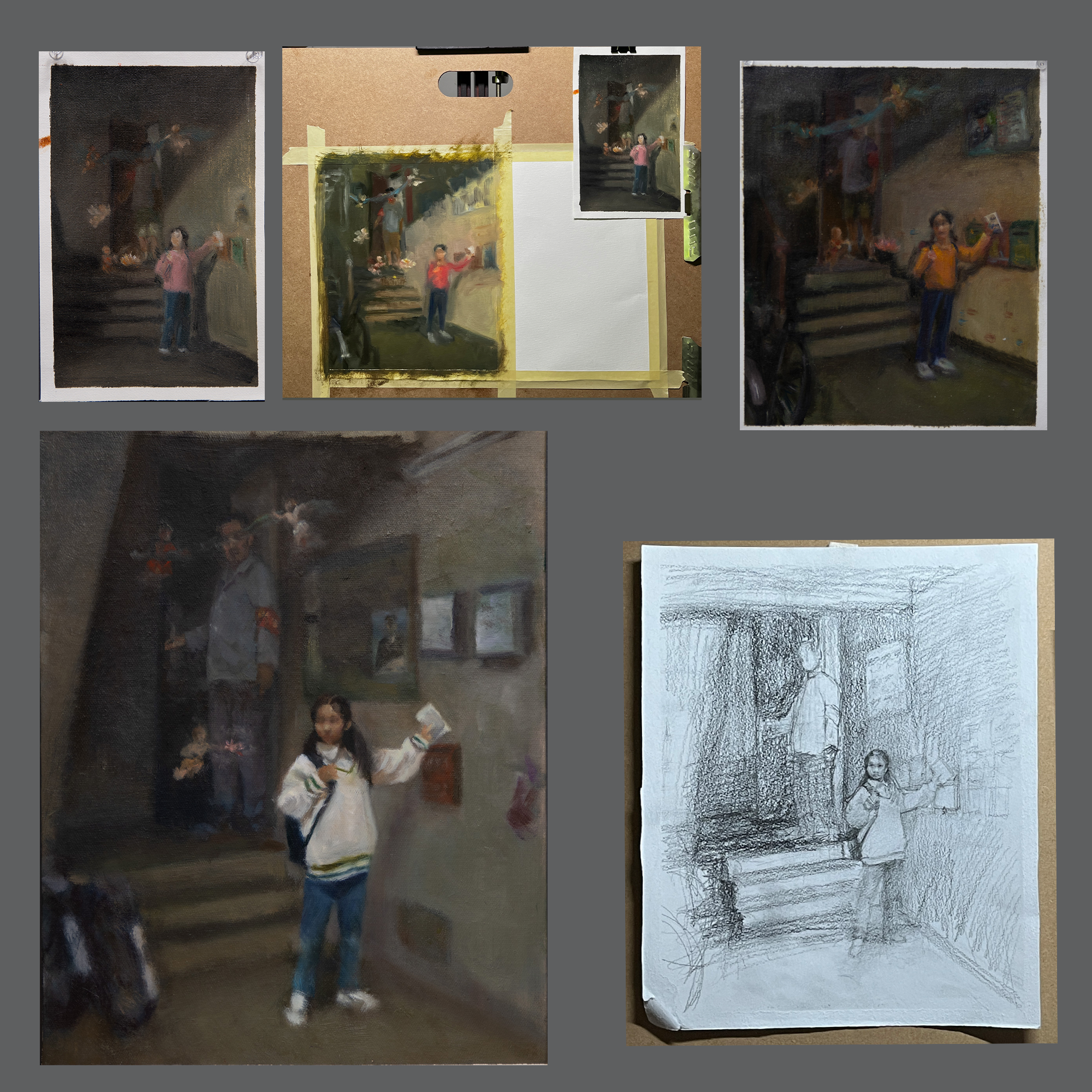
Original color studies from Nancy Y.
Original Detail studies from Nancy Y.
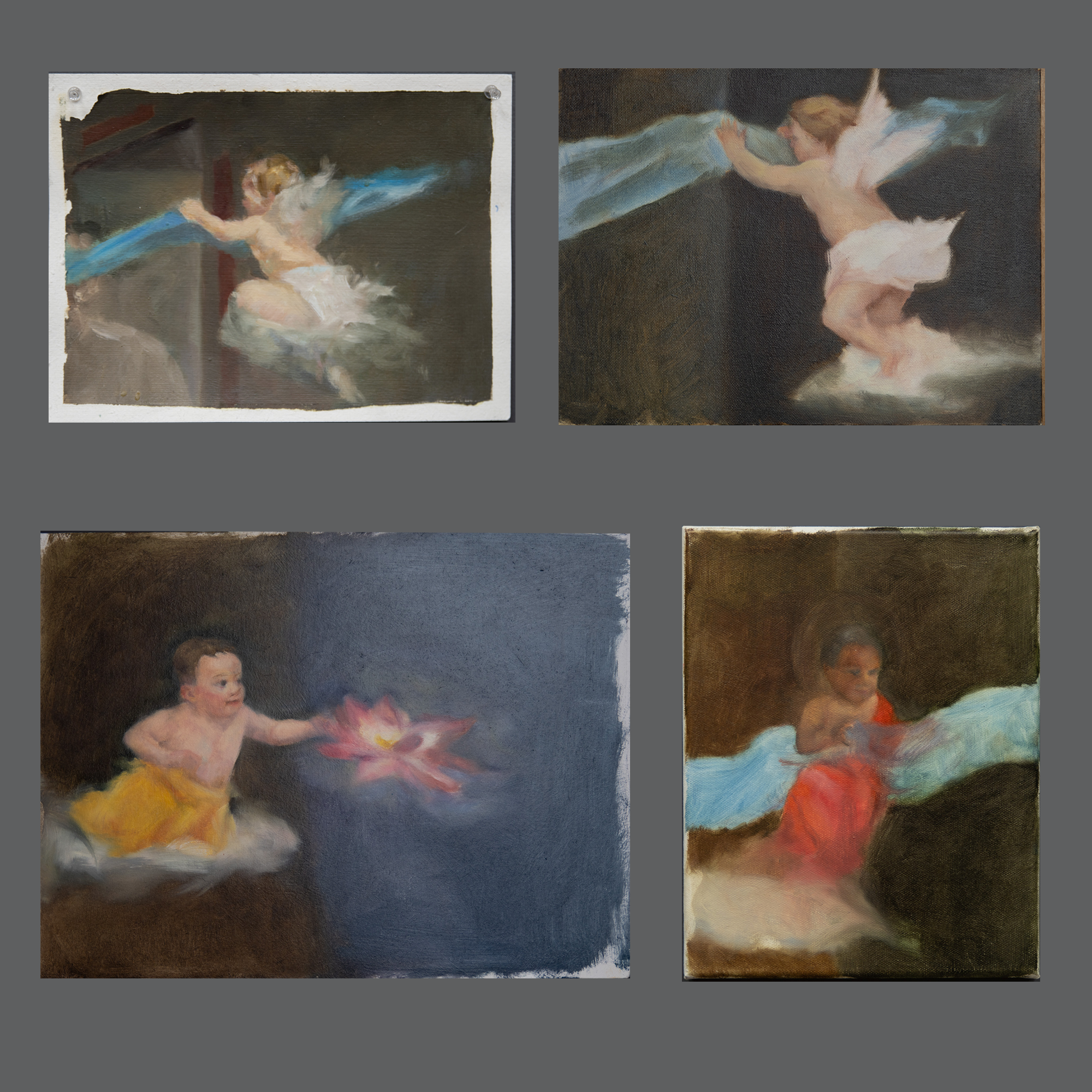
Original Detail studies from Nancy Y.
Architecture & Space
To verify the perspective of the spatial elements, I first built a digital 3D model in SketchUp, followed by a physical paper maquette as a secondary check. With the reference to mimic memory, which allowed me to construct accurate props and ground the setting in historical reality. Additionally, a small-scale landscape model proved invaluable in aligning my lighting design with the models' photographic references.
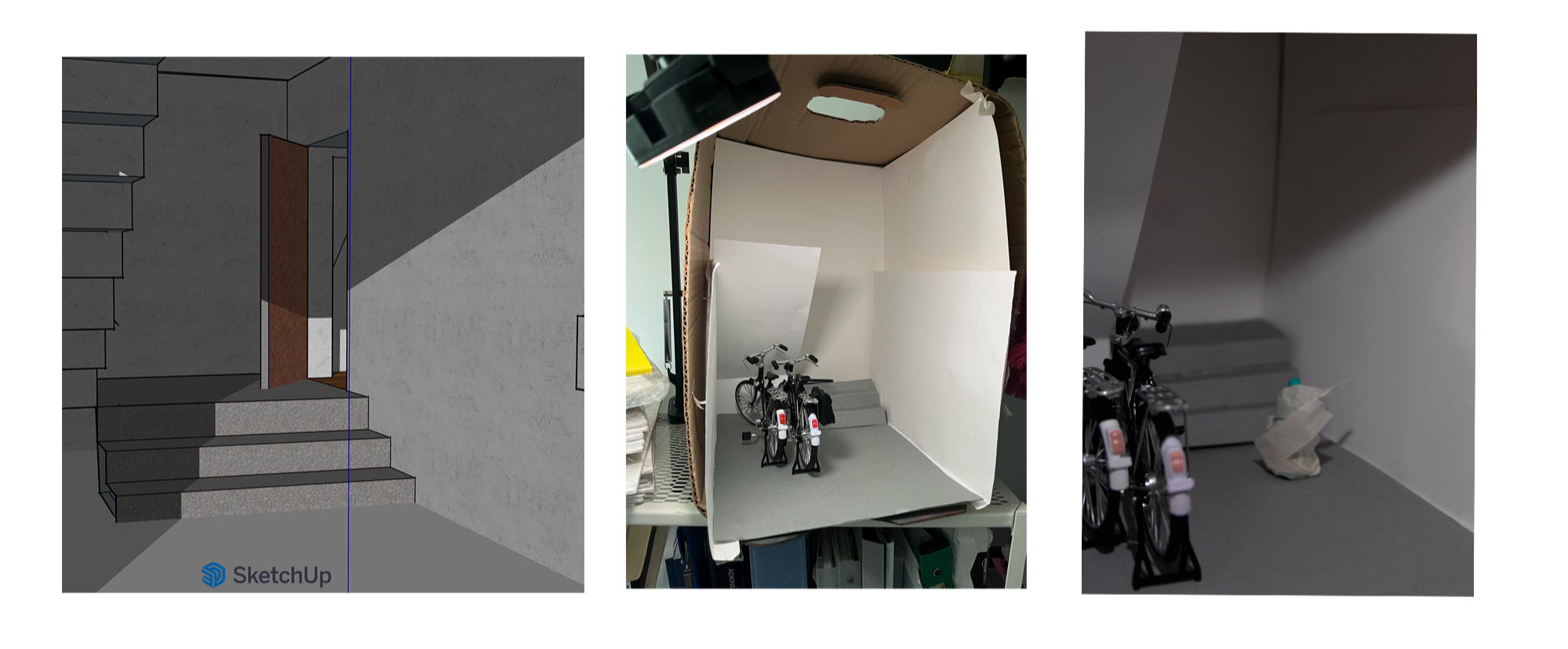
Original model building made by Nancy Y.
Conclusion
After three years of conceptual development, a full year of physical preparation, and one hundred days of meticulous painting on canvas, Mercy stands as the realization of my ambition to address this profound subject through realistic oil painting.
The work is not perfect, and I fully accept those imperfections. I believe that imperfection is the natural condition of every human endeavor; perfection belongs to God alone. Ultimately, what matters most is not the final achievement itself, but the disposition with which we approach it: keeping the soul pure and remaining humble before heaven, regardless of how significant the resulting artwork may be.
Mercy is, at its core, a record of a historical moment, of a courageous act, and of my enduring conviction that art, when guided by truth and compassion, can bear witness in ways that transcend the merely visual. It is my sincere hope that viewers who encounter this painting will find more than just a scene from history. I hope it serves as an invitation to reflect on the timeless human values embodied by that little girl's act: the courage to speak truth, the mercy to protect the vulnerable, and the faith that freedom is a divine gift belonging to all people.